Global Expat FinanceZero FX GougingStatutory 2026 Audit
The Ultimate Expat Banking Playbook: Wise vs. Revolut vs. Charles Schwab vs. Local Accounts
How remote workers, digital nomads, and expats eliminate 3% to 5% ATM and currency conversion gouging, defeat predatory Dynamic Currency Conversion (DCC) traps, bypass foreign proof-of-address barriers, and prevent catastrophic account freezes while living abroad.
By Kevin Jaewoong Jeong•Updated September 2026•24 min read
Cross-border financial operations: Managing multi-currency balances, client invoices, and international banking rails without getting stranded by compliance freezes.
⚡ At-a-Glance: The 5 Non-Negotiable Rules of Nomad Banking
Never rely on a single bank: Automated anti-money laundering (AML) bots flag foreign logins and sudden wire transfers. An unexpected account freeze takes 3 to 7 business days to resolve. Always carry cards from at least two completely independent banking networks.
Always decline Dynamic Currency Conversion (DCC): When an ATM or point-of-sale machine asks to charge you in USD, CAD, or EUR with its "guaranteed conversion rate," choose Local Currency. DCC adds a predatory 5% to 12% hidden markup on top of your withdrawal.
Air-gap your primary life savings: Never swipe your main domestic checking card at an overseas beach bar or ATM. Use a 3-tier banking stack: Home Anchor Bank (salary/investments) → Multi-Currency Buffer (Wise/Revolut) → Travel ATM Card (Charles Schwab / EQ Bank).
Preserve your domestic mobile number for bank 2FA: Banks block VoIP numbers (Google Voice) for security SMS codes. Keep your physical domestic SIM or low-cost eSIM active with Wi-Fi Calling enabled (see our companion Expat Phone & 2FA Guide).
Do not open local accounts on tourist visas: Except in rare jurisdictions, local retail banks in Europe and East Asia will reject you without a long-term residency permit. Rely on multi-currency fintech until you hold a verified Digital Nomad Visa or residence card.
Planning your international relocation destination?
Match your monthly remote income, tax preferences, and banking setup against 12 top countries in seconds.
1. The Expat Banking Paradox & The 3-Tier Firewall
Traditional banks operate under national borders. Their fraud algorithms monitor residential addresses, domestic IP addresses, and routine local transactions. When you travel through Bangkok, Lisbon, or Tokyo, your normal lifestyle looks like criminal fraud to an automated bank algorithm:
Your phone logs in from a foreign mobile carrier IP address thousands of miles from home.
Your debit card attempts a cash withdrawal at 3:00 AM domestic time.
A foreign client wires $8,000 from an offshore entity via SWIFT.
Your bank demands a utility bill dated within 90 days matching your home-country address.
To an automated risk algorithm, a digital nomad or remote worker looks identical to an account takeover victim or money mule. If you rely on a single domestic checking account, one automated flag can lock you out of your money with zero notice. To survive long term, you must build an air-gapped 3-tier financial architecture.
The 3-Tier Expat Financial Firewall
Tier 1: The Fortress
Home Anchor Bank
Chase, Capital One, RBC, Barclays. Holds 85% to 90% of your capital. Receives domestic payroll, investments, and client retainers.
Rule: Debit card stays electronically locked in your apartment safe. Never swiped on the street.
Tier 2: The Router
Multi-Currency Buffer
Wise or Revolut. Holds 1 to 2 months of operating expenses. Provides local receiving details in 9+ currencies (USD, EUR, GBP, AUD, SGD).
Rule: Uses disposable virtual cards for Grab, Uber, and online booking portals.
Tier 3: The Field Operator
Travel ATM Card
Charles Schwab High Yield Investor Checking (US) or EQ Bank (Canada). Zero foreign transaction fees and 100% worldwide ATM fee rebates.
Rule: Keep only $300 to $800 here. Top up as needed from Tier 1 via push transfer.
By air-gapping your accounts, a compromised merchant terminal or card skimmer in an airport will only access your small disposable balance in Tier 2 or Tier 3. Your life savings in Tier 1 remains completely insulated.
Comparing actual statutory fees, foreign exchange spreads, ATM withdrawal allowances, and deposit insurance across top international expat banking options:
Daily mobile spending, disposable virtual cards for apps
Charles Schwab Investor Checking
0.00% FTF (Visa wholesale rate)
100% Unlimited Worldwide Rebates
Daily cash limit (~$1,000/day)
FDIC Insured ($250,000 USD)
Undisputed #1 card for global cash withdrawals
Fidelity Cash Management (CMA)
0.00% on debit card; 1% on credit
100% Worldwide Rebates (Immediate posting)
Daily cash limit (~$520–$1,000/day)
SIPC + FDIC Insured ($5,000,000 via sweep)
Earning 5% APY on idle cash + same-day ATM rebates
EQ Bank Card (Canada)
0.00% FX Markup (Mastercard rate)
Domestic Canada only ($0 abroad)
Daily card limit (~$500 CAD/day)
CDIC Insured ($100,000 CAD)
Best no-FTF spending option for Canadian nomads
Local Destination Bank (e.g. Bangkok Bank, Sabadell)
Local currency only
0% at own network ATMs
Standard domestic limits
Local Central Bank Guarantee
Paying long-term rent, local utility direct debits, PromptPay/Bizum/QRIS
3. Wise Multi-Currency: The International Rails Engine
Wise is the benchmark platform for cross-border currency conversion. Instead of sending money across borders through the antiquated SWIFT correspondent banking network (where 2 or 3 intermediary banks deduct $15 to $40 along the way), Wise maintains domestic bank accounts in dozens of countries. When you convert USD to EUR, Wise takes your USD in the US and pays out EUR from its local account in Europe.
Local Receiving Account Details Across 9 Currencies
Wise issues actual domestic bank account details in your name for major economic zones. Clients or employers can pay you using local clearing systems with zero international transfer fees:
United States Dollar (USD): Routing number and account number (ACH direct deposits are free; incoming domestic wires cost ~$6.11 flat).
Euro (EUR): Belgian SEPA IBAN (`BE...`) supporting free instant SEPA credit transfers across 36 European nations.
British Pound (GBP): UK Sort Code and 8-digit account number supporting free Faster Payments (FPS).
Australian Dollar (AUD): 6-digit BSB code and account number with PayID support.
Canadian Dollar (CAD): Transit, institution, and account number supporting free Electronic Funds Transfers (EFT).
Singapore Dollar (SGD): DBS Bank account number with instant FAST and PayNow support.
New Zealand Dollar (NZD), Hungarian Forint (HUF), Romanian Leu (RON): Local clearing accounts.
⚠️ Critical Compliance Gotcha: Personal vs. Business Account Freezes
Receiving frequent commercial payments from corporate clients into a personal Wise account violates Wise Terms of Service. If an automated audit detects invoices, recurring business transfers, or third-party company payments entering a personal account, Wise algorithms will freeze the account for compliance review. If you freelance or invoice clients, register a dedicated Wise Business account. It costs a one-time onboarding fee (~$31 USD / £45 GBP) and shields you from business transaction freeze triggers.
ATM Limitation: Wise is a spending and transfer tool, not an ATM cash card. Free ATM withdrawals are capped at $100 USD (or £200 GBP / €200 EUR) per calendar month across two withdrawals. Beyond that, Wise charges a 1.75% variable fee plus a fixed fee per withdrawal. For cash-heavy destinations (such as Thailand or Bali), rely on Charles Schwab or local accounts instead.
4. Revolut: Daily Spending, Security & The Weekend FX Trap
While Wise functions as the cross-border highway, Revolut acts as the daily operational card in your pocket. As a fully licensed bank in the UK and European Union, deposits held in Revolut are protected up to €100,000 (via the Lithuanian State Deposit Insurance) and £85,000 (via the UK Financial Services Compensation Scheme).
⚠️ The 1.0% Weekend FX Markup Trap (And How to Defeat It)
Foreign exchange markets close on Friday evening (5:00 PM New York time) and reopen on Sunday evening. To protect itself from price volatility when markets are offline, Revolut charges a 1.0% surcharge on all currency conversions made over the weekend on the Standard free tier.
How to avoid it: Open your Revolut app on Friday afternoon before market close. Manually convert your estimated weekend spending money into the local currency of your destination (e.g. convert USD into Thai Baht, Japanese Yen, or Euros). Over the weekend, Revolut will spend directly from that local balance with 0% fee.
Disposable Virtual Cards vs. The Hotel Hold Trap
Revolut includes disposable virtual cards. The 16-digit card number, CVV, and expiration date automatically regenerate immediately after each transaction. This is ideal for booking local taxi apps (Grab, Bolt), buying food delivery, or purchasing ferry tickets from unverified regional websites:
🛑 Danger: Never Use Disposable Cards for Hotels or Rental Cars
Hotels and car rental agencies place temporary pre-authorization holds (security deposits) upon check-in, then finalize the charge at check-out or release the deposit days later. Because a disposable card number self-destructs the moment the initial hold is approved, the hotel will fail to process incidentals or finalize payment. Your booking may be rejected or deposit refund trapped. For hotels and vehicle rentals, always use a standard physical card or permanent virtual card with spending limits.
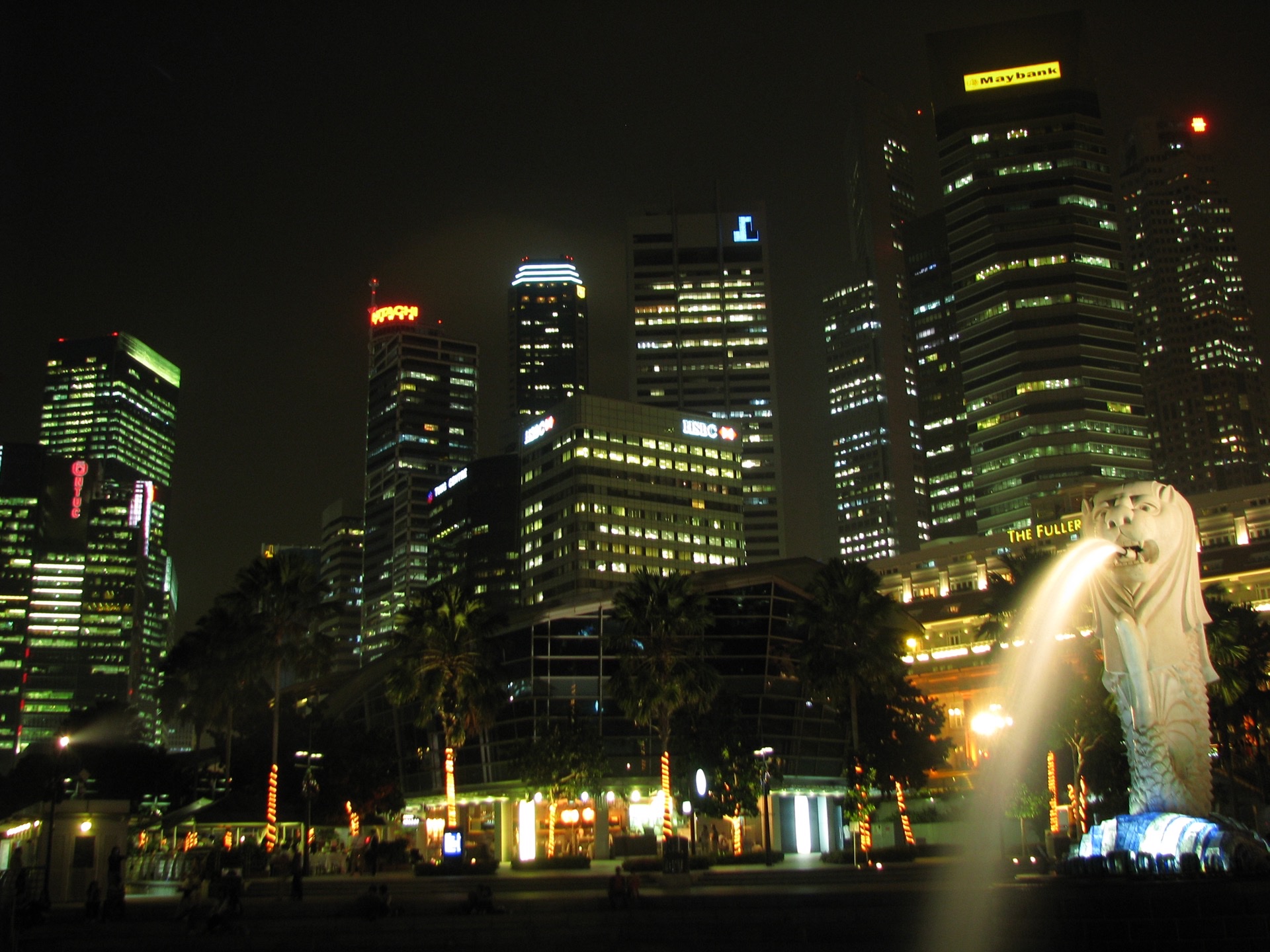
Global wealth centers: Singapore, Jersey, and Switzerland host dedicated international expat banks like HSBC Expat, offering multi-currency holding facilities for remote entrepreneurs.
5. Charles Schwab: The Undisputed King of Global ATM Cash
For US citizens and lawful permanent residents, the Charles Schwab High Yield Investor Checking Account is the single most valuable financial tool for international travel. Its terms are simple:
Unlimited Worldwide ATM Fee Rebates: Every ATM surcharge imposed by any bank or independent ATM operator worldwide is refunded 100% at the end of each monthly statement cycle.
Zero Foreign Transaction Fees (FTF): Swiping your debit card anywhere on earth incurs 0% foreign exchange markup over the official Visa wholesale rate.
No Account Minimums: No monthly maintenance fees, no minimum deposit requirements, and no minimum balance threshold.
How Schwab's ATM Rebates Work in Practice
When you withdraw 20,000 THB in Thailand, the Thai bank charges a mandatory 220 THB (~$6.50 USD) surcharge. In Mexico, an ATM may charge 150 MXN (~$8.00 USD). In Spain, a Euronet ATM might demand €5.00. Schwab tracks every third-party access fee and credits the entire lump sum back to your checking account on the final business day of your monthly statement cycle.
💡 The Floating Requirement
Because rebates post at the end of the monthly billing cycle rather than immediately, you must maintain enough cash in the account to float the temporary ATM surcharges until statement settlement.
The Symantec VIP App: Eliminating SMS 2FA Failures
The biggest headache for Americans overseas is getting locked out of online banking because the bank sends a 2FA verification code to a disconnected US phone number. Schwab officially supports Symantec VIP Access, a software authenticator app that generates rotating 6-digit verification codes completely offline. It requires zero cellular network coverage and zero roaming data. Call Schwab customer support (+1-317-596-4501) to link Symantec VIP to your account before departure.
6. Opening Local Accounts Abroad: When to Do It vs. Skip It
Due to Common Reporting Standard (CRS) tax rules and global anti-money laundering regulations, opening a local brick-and-mortar account on a tourist visa is nearly impossible. Here is the operational reality across top expat destinations:
🇪🇸 Spain (BBVA, Sabadell, CaixaBank)White NIE vs. TIE Card
Non-residents can open an account in-branch with a passport and white NIE certificate, but pay steep maintenance fees (€140–€200/year) plus a mandatory police non-residence certificate renewal every two years (€35). Once your physical TIE card arrives under the Spain Digital Nomad Visa, visit your branch to convert it to a zero-fee resident account and unlock Bizum for mobile payments.
🇵🇹 Portugal (Millennium BCP, ActivoBank)Mandatory for D8 Visa
Portugal requires an active Portuguese bank account with deposited living funds (€9,840–€19,680 EUR) before consular visa approval. Skip ActivoBank (which now strictly requires local residency cards) and open remotely with Millennium BCP through a legal fiscal representative. A local card is required to use MB WAY and pay at local Multibanco-only shops (detailed in our Portugal D8 Visa Guide).
🇹🇭 Thailand (Bangkok Bank, Kasikorn)PromptPay QR Access
Standard suburban branches reject tourists and DTV holders. Visit the Bangkok Bank Silom Head Office in Bangkok with your passport, DTV visa stamp, and registered lease agreement. Expect to purchase their annual accident insurance policy (2,500–4,000 THB / ~$75–$115 USD) as an unofficial prerequisite for account opening. An active account unlocks PromptPay QR, accepted at 95% of Thai street vendors (see our Thailand DTV Visa Guide).
🇯🇵 Japan (Japan Post Bank / Yūcho)6-Month FEFTA Wall
Under Japan Foreign Exchange and Foreign Trade Act (FEFTA), foreigners staying less than 6 months are legally classified as non-residents. Megabanks (MUFG, SMBC) and online banks (Sony Bank) will reject you. The 6-month Digital Nomad Visa does not allow enough stay to unlock standard banking. Rely on Charles Schwab at 7-Eleven ATMs and load cash onto digital Suica/Pasmo cards for daily transit and convenience stores (reviewed in our Japan Expat Guide).
🇲🇾 Malaysia & 🇮🇩 Bali (Indonesia)MDEC Letter & KITAS Wall
In Malaysia, DE Rantau pass holders can open accounts at Maybank or CIMB by presenting an official MDEC Bank Account Opening Support Letter, granting access to DuitNow QR (Malaysia Playbook). In Bali, tourists cannot legally bank. Securing an official account at Bank Central Asia (BCA) requires a valid KITAS/e-ITAS (such as the E33G Remote Worker Visa) and local tax ID (NPWP) to unlock QRIS (Bali Guide).
7. Compliance Traps & Account Freeze Triggers
When an account is frozen abroad, customer support agents are legally prohibited from explaining why under international "tipping off" laws (such as Section 333A of the UK Proceeds of Crime Act). Understand the automated triggers that trip the security wire:
1. Impossible Travel Velocity
Logging in from an IP in Toronto at 9:00 AM and an IP in Bali at 1:00 PM flags session hijacking. When combined with GPS mismatches on your phone, automated fraud algorithms instantly lock app access.
2. Commercial VPN Blocklists
Banks maintain real-time lists of commercial VPN servers (NordVPN, ExpressVPN). Routing your banking login through a datacenter IP raises your risk score. Use local residential Wi-Fi or a private self-hosted WireGuard/Tailscale node.
3. The $10,000 "Structuring" Trap
Breaking a $12,000 transfer into two transfers of $6,000 to avoid the $10k reporting threshold is a federal crime called structuring. Bank AML bots flag repeated transfers just below thresholds ($4,900 or $9,500) faster than clean $15,000 transfers.
4. Virtual Mailbox (CMRA) Rejections
Banks cross-reference addresses against postal databases. Addresses flagged as Commercial Mail Receiving Agencies (CMRAs) or mailbox rental shops trigger automatic account opening rejections and periodic KYC freezes.
🚨 Emergency Protocol: What to Do If an Account Gets Frozen Abroad
Do not panic-disclose: Never message support saying: "Why is my account locked? I moved to Bali 14 months ago!" Confessing permanent relocation to an unsupported country gives the bank open-and-shut legal grounds to immediately terminate your account.
Pivot to secondary cards: Immediately switch daily expenses to your Tier 2 or Tier 3 backup cards and emergency hard cash reserve.
Call the fraud department via collect phone: Use the direct international collect phone number printed on the back of the physical card, calling via Wi-Fi Calling to verify recent legitimate transactions.
Supply a contiguous paper trail: For AML fund inquiries, provide a single clean PDF containing the signed client contract, matching itemized invoice, and bank transfer receipt.
Escalate to the governing regulator: If chat support stalls for more than 7 business days, file a formal complaint citing immediate overseas hardship with the UK Financial Ombudsman Service (FOS), Bank of Lithuania (for Revolut EU), or US CFPB.
Online security hygiene: Use hardware passkeys, offline TOTP authenticators, and tokenized mobile tap payments to prevent skimming and credential theft.
Dynamic Currency Conversion (DCC) is an optional settlement service that prompts foreign cardholders at ATMs and payment terminals to bill the transaction in their home currency instead of local currency. It is designed to extract profit:
The 5% to 12% Hidden Markup: When you choose your home currency, the foreign ATM operator sets the conversion rate, adding an inflated spread. Independent tourist ATMs (such as Euronet across Europe) routinely charge an 8% to 15% markup.
Deceptive Dark Patterns: The ATM will display green buttons for "Accept Guaranteed Conversion" and red or grey buttons for "Decline Conversion / Charge in Local Currency." Choosing Decline Conversion is the correct choice.
The Wholesale Interbank Rate: When you choose local currency, the conversion is processed directly by Visa or Mastercard at interbank wholesale rates (within 0.2% to 0.5% of real market rate).
Card skimmers and shimmers physically intercept card data at foreign terminals. Implement two defense layers:
Tokenized Tap-to-Pay (Apple Pay / Google Wallet): Your physical card never touches the terminal slot. The merchant receives a dynamic, single-use token that cannot be cloned into a magnetic stripe card. Use NFC tap at bank ATMs whenever available.
Just-in-Time Unfreezing: Keep your ATM card permanently locked inside your mobile banking app. When standing in front of the ATM, open your app, toggle "Unfreeze," complete your cash withdrawal, and immediately toggle "Freeze" again before walking away. Cloned card data harvested by skimmers will immediately decline.
9. The T-90 Pre-Departure Action Plan
Execute these banking milestones chronologically before leaving your home country:
T-90 to T-60 Days: Apply While Geographically Domestic
Open your Charles Schwab Bank Investor Checking (or Fidelity CMA / EQ Bank) account while you are physically located at your home address. Applying from an overseas IP address triggers instant KYC rejections and credit fraud alerts.
T-60 to T-30 Days: Connect the Financial Plumbing
Open and verify your Wise and Revolut accounts. Link your domestic anchor checking account via ACH or direct debit. Execute a dry run transfer: move $50 from Tier 1 into Wise, convert $25 to a foreign currency, and transfer $25 into Tier 3. Confirm transfer speeds and notifications.
T-30 to T-7 Days: Decouple from Cellular SMS
Migrate two-factor authentication from SMS text messages to app-based authenticators (Symantec VIP for Schwab, TOTP/1Password for Wise and Revolut). Activate Wi-Fi Calling on your domestic phone line and set up a secondary travel eSIM with Dual-SIM isolation to prevent $16/day carrier data leakage abroad. Order backup physical debit cards.
T-7 to T-0 Days: Stage Your Cards & Emergency Stash
Split your physical cards across three separate bags (wallet, backpack, luggage safe). Withdraw $300 to $500 in brand-new, uncreased, unmarked US Dollar or Euro bills (post-2013 banknotes with no tears). In Southeast Asia and Latin America, clean cash is universally exchangeable if digital systems go offline.
Customs compliance: Remember that international customs regulations require declaring physical cash exceeding $10,000 USD (or local currency equivalent) at border crossings.
10. Frequently Asked Questions
What is the best bank account for digital nomads?
The optimal setup is not a single bank, but a tiered stack. For US citizens, Charles Schwab Bank Investor Checking is the gold standard due to unlimited worldwide ATM fee reimbursements and 0% foreign transaction fees. For Europeans, Revolut and Starling Bank eliminate foreign currency surcharges. For Canadians, EQ Bank avoids big-bank 2.5% foreign fees. Pairing your domestic anchor bank with a Wise multi-currency account provides virtual local accounts (USD, EUR, GBP, AUD, SGD) with direct mid-market exchange rates.
How can I avoid ATM fees when traveling internationally?
First, use a debit card with global ATM fee rebates (like Charles Schwab or Fidelity in the US), which automatically refunds third-party operator fees at month-end. Second, avoid standalone tourist ATMs (Euronet, Travelex) that charge steep operator surcharges; use official bank-branch ATMs. Third, in countries with mandatory non-reimbursable fees (like Thailand 220 THB surcharge), withdraw the maximum cash limit per transaction to dilute the fixed fee. Finally, always decline Dynamic Currency Conversion (DCC) and choose local currency.
What is Dynamic Currency Conversion (DCC) and why should I decline it?
Dynamic Currency Conversion is a prompt offering to charge your card in your home currency instead of the local currency. You should always decline DCC and select the local currency. Choosing your home currency lets the foreign ATM operator or merchant apply their own conversion rate with a 5% to 12% hidden markup. Choosing local currency forces the transaction through Visa or Mastercard at the wholesale interbank rate.
Can I open an overseas bank account on a tourist visa?
In most developed countries (EU, UK, Singapore, Japan), opening a resident retail bank account on a tourist visa is impossible due to strict AML and Common Reporting Standard (CRS) rules requiring local tax numbers and proof of permanent address. However, exceptions exist: select Thai banks (Bangkok Bank) permit savings accounts with verified leases and accident insurance packages; Georgia permits simple passport accounts. For most remote workers, fintechs like Wise and Revolut provide local IBANs without requiring local physical residency.
What should I do if my bank account is frozen while traveling abroad?
1) Switch immediately to your secondary backup card (from an independent bank and network) and cash reserves. 2) Call your bank international fraud department via the collect number printed on the back of your card, using Wi-Fi Calling to bypass international phone blocks. 3) Verify recent transactions and explain that you are on extended international travel. 4) If compliance requests source of funds, submit a clean PDF with your client contract, matching invoice, and corporate registration. 5) If support stalls for over a week, file a formal complaint citing overseas vulnerability with the financial ombudsman.
Related Strategy & Operational Playbooks
Explore our interconnected technical guides for cross-border infrastructure, tax residency, and destination relocation.
📱
Expat Phone, eSIM & 2FA Guide
How to preserve your domestic mobile number, avoid $16/day roaming charges, and guarantee banking 2FA SMS reception anywhere.