The Taiwan Employment Gold Card Guide: Income Rules, Tax Math & Living Costs

On this page
Taiwan offers one of the most generous, flexible, and welcoming residency visas in Asia: the Employment Gold Card. It gives you open work authorization, world-class universal healthcare from your first month, a 50% income tax discount on high earnings, and a fast-track pathway to permanent residency in just three years—all without needing a Taiwanese company to sponsor you.

Comparing this destination against other global nomad and expat visas?
⚡ Taiwan Gold Card at a Glance
- The 4-in-1 Card: Combines your Work Permit, Resident Visa, Alien Resident Certificate (ARC), and Multiple Re-entry Permit into a single smart card valid for 1, 2, or 3 years.
- No Sponsor Needed: You have an open work permit. You can work remotely for your current employer back home, freelance for international clients, start your own Taiwanese startup, or take a local job.
- Income Qualification: The simplest route requires proving a monthly salary of at least NT$160,000 (~$5,000 USD / ~$6,800 CAD) in any one of the past three years.
- 50% Income Tax Relief: Any salary income you earn over NT$3,000,000 (~$95,000 USD) is taxed at half the normal rate for your first 5 years of Taiwanese tax residency.
- Healthcare: Gold Card holders can access Taiwan's National Health Insurance when they meet the applicable enrollment rules. Check your eligibility and budget for premiums, copayments and charges outside NHI coverage.
- 3 Years to Permanent Residency: Normal foreigners must wait 5 years for an Alien Permanent Resident Certificate (APRC). Gold Card holders can qualify in just 3 years.
1. What Exactly Is the Employment Gold Card?
Most work visas tie you to a single employer. If you lose your job or want to switch companies, your visa is cancelled and you have to leave the country. Taiwan created the Employment Gold Card specifically to break this trap for international talent.
The Gold Card is an open work permit and residency card rolled into one. It is managed jointly by Taiwan's National Development Council (NDC), Ministry of Foreign Affairs (MOFA), Ministry of Labor (MOL), and National Immigration Agency (NIA). With this card in your wallet:
- You can live in Taiwan full-time while keeping your remote job with a company in Canada, the United States, Europe, or anywhere else.
- You can take on local consulting projects or switch employers inside Taiwan without asking immigration for permission.
- You can incorporate your own Taiwanese company or run an online e-commerce business.
- Your spouse and dependent children can join you on resident visas.
- You can enter and leave Taiwan as many times as you wish without having to apply for re-entry permits.
2. How to Qualify: The Salary and Tech Routes
You do not need to be a celebrity or a Nobel laureate to qualify. The Gold Card covers 10 different professional fields: Science & Technology, Economy, Digital, Finance, Education, Culture & Arts, Sports, Law, Architecture, and National Defense.
By far the easiest and most common way to qualify is through the Salary Route under either the Economy or Science & Technology / Digital categories.
| Qualification Route | What You Need to Prove | Documents Required | Difficulty |
|---|---|---|---|
| Salary Route (Most Popular) | Monthly salary of NT$160,000+ (~$5,000 USD / ~$6,800 CAD) in any 1 of past 3 years | Official tax withholding forms (e.g. Canadian CRA Notice of Assessment / T4, US W-2 / 1040, or official government tax statement) + employment contract | Straightforward |
| Digital & AI Route | Over 8 years of specialized experience in software engineering, AI, cyber security, or semiconductor design | Detailed resume, portfolio, employer recommendation letters, and code/patent contributions | Moderate |
| Startup Founder Route | Raised at least $500,000 USD in venture capital, or won recognized international innovation competitions | Investment agreements, term sheets, cap table, or patent registration certificates | Specialized |
💡 Pro Tip on Proving the NT$160,000 Monthly Salary
The Taiwanese reviewing committee wants to see official government tax documents rather than just personal bank deposits or paystubs. If you are Canadian, submit your CRA Notice of Assessment showing an annual income of at least NT$1,920,000 (~$80,000 CAD). If you are American, submit your IRS Form 1040 or W-2 showing ~$60,000+ USD. This makes approval virtually guaranteed under the salary standard.
3. Step-by-Step Action Plan: How to Get Your Gold Card
Applying for the Taiwan Gold Card is done 100% online through a centralized portal. Here is your chronological roadmap from application to landing in Taipei.
Phase 1: File Online on the Official Portal
Day 1Go to the official government portal: goldcard.nat.gov.tw. Create an account on the National Immigration Agency's Foreign Professionals Online Application Platform.
- Select your field (e.g., Economy or Digital / Science & Technology).
- Select the regulation clause: "Monthly income of NT$160,000 or above".
- Upload your passport bio page (must be valid for at least 6 months), passport-style digital photo, tax assessment notices, and employment verification letter.
- Pay the application fee shown in the official Gold Card fee guidance. The amount depends on your nationality, whether you apply in Taiwan or abroad, and the card duration. Compare the available durations and current fees before paying.
Phase 2: Government Review & What to Do Meanwhile
Wait Time: 30 to 60 DaysYour application moves through multiple departments: Ministry of Labor, relevant ministry (MOEA or Ministry of Digital Affairs), Ministry of Foreign Affairs, and the National Immigration Agency. You can check your application status on the portal anytime.
- Unlock your phone: Make sure your smartphone is carrier-unlocked so you can pop in a Taiwanese physical SIM or scan a local eSIM immediately.
- Set up international travel insurance: Purchase coverage (such as SafetyWing or Allianz) to protect you during your flight and first few days before your local healthcare card is issued.
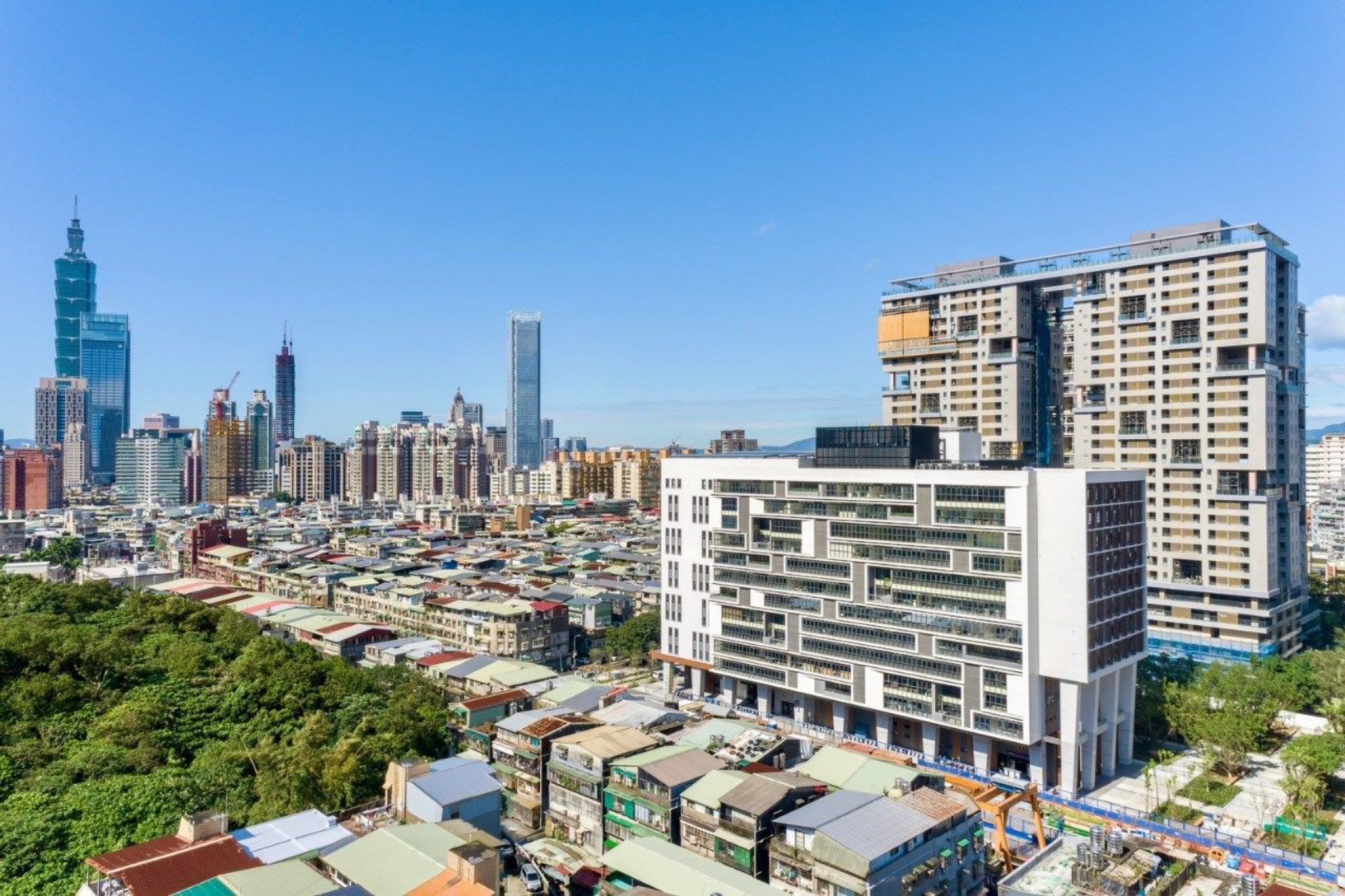
- Shortlist neighborhoods: Research areas like Da'an, Zhongshan, and Songshan in Taipei (convenient, close to tech cafes), Linkou (Startup Terrace hub), or Kaohsiung (warm weather, spacious harbor apartments for half the price).
- Order bank statements: Have clean PDFs of your international bank accounts ready for when you set up your local checking account in Taiwan.
Phase 3: Passport Verification & Entry Certificate
Day 40 to 60Once the review passes, you will receive an email stating: "Notice for Passport Inspection".
- If you are outside Taiwan: Take your original physical passport to your nearest Taipei Economic and Cultural Office (TECO) or overseas mission (e.g. in Vancouver, Toronto, Ottawa, New York, San Francisco, London). They will verify your passport and stamp approval within 5 to 7 business days.
- If you are already in Taiwan: Bring your passport to the National Immigration Agency service center in Taipei or your local municipality.
- Download the Entry Certificate: Once verified, log into the portal and download your Taiwan Employment Gold Card Resident Authorization Certificate. Print this color certificate with its barcode. It serves as your official visa to board your flight to Taiwan.
Phase 4: Landing in Taiwan & Picking Up Your Physical Card
First 30 DaysPresent your Resident Authorization Certificate and passport at Taiwan Taoyuan International Airport (TPE) border control. You are formally stamped into Taiwan as a resident.
- Within 30 days of arrival, visit the designated National Immigration Agency (NIA) Service Center in the city where you are staying (e.g., Taipei City Service Center on Guangzhou Street).
- Present your original passport and original Resident Authorization Certificate.
- Receive your physical gold plastic Employment Gold Card! This card contains your official Alien Resident Certificate (ARC) ID number, which unlocks everything in Taiwanese society.
4. Your First 30 Days: Healthcare, Phone, Banking & Transit
Having your physical Gold Card makes setting up your life in Taiwan remarkably smooth. Here is exactly where to go and what to do during your first month:
A. World-Famous National Health Insurance (NHI)
Taiwan’s National Health Insurance is widely recognized as one of the best, most efficient healthcare systems in the world.
- How to Enroll: If you are employed by a Taiwanese company or incorporate your own company, you and your dependents are enrolled from Day 1. If you work remotely for an overseas company, you can enroll after 6 months of continuous stay, or immediately if you establish a local tax consultancy or company.
- Cost: Monthly premiums are typically between NT$1,200 and NT$3,000 (~$38 to $95 USD).
- Copayments and other charges: Your payment depends on the provider, treatment and NHI coverage. Ask the clinic or hospital about copayments, registration fees, medications and any self-paid services before treatment. See the NHIA guidance on out-of-pocket payments.
B. Getting a Local Phone Plan (5G Unlimited)
Walk into any branch of Chunghwa Telecom, Taiwan Mobile, or Far EasTone with your physical Gold Card and passport. You can get an unlimited high-speed 5G mobile plan for roughly NT$599 to NT$999/month (~$19 to $31 USD). Unlike many countries, Taiwan’s unlimited plans are truly uncapped with blistering speeds.
C. Opening a Taiwanese Bank Account
Your Gold Card has your 10-digit Taiwanese Resident Certificate ID number printed on it. This functions identically to a Taiwanese citizen's National ID for tax and banking purposes.
Recommended expat-friendly banks include:
- E.SUN Bank (玉山銀行): Well-known for great English mobile banking, seamless PayPal integration, and responsive expat support.
- Mega International Commercial Bank (兆豐銀行): Experienced in processing foreign exchange transfers and overseas wire remittances.
- CTBC Bank (中國信託): Largest private bank in Taiwan with 7-Eleven ATM accessibility on almost every street corner.
D. Getting a TPASS for Unlimited Transit
Taiwan’s public transportation is clean, punctual, and safe. Pick up an EasyCard or iPASS at any metro station and load the TPASS Commuter Monthly Pass for NT$1,200/month (~$38 USD). This gives you unlimited rides on the Taipei Metro (MRT), New Taipei light rails, city buses, and regional commuter trains across the entire northern metropolitan area.

5. The 50% Income Tax Cut Explained in Plain English
To attract high-earning foreign professionals, Taiwan passed Article 20 of the Act for the Recruitment and Employment of Foreign Professionals. If you meet the criteria, you receive a massive tax cut on your salary for your first 5 years in Taiwan.
📊 How the 50% Tax Relief Works: A Real Example
The rule is simple: Any salary income you earn above NT$3,000,000 is discounted by 50% for tax purposes.
• First NT$3,000,000: Taxed at Taiwan's standard progressive tax rates (after standard deductions and allowances).
• Remaining NT$3,000,000: Receives the 50% statutory discount! Only NT$1,500,000 is counted as taxable income.
• Total Taxable Base: NT$4,500,000 instead of NT$6,000,000. You save tens of thousands of dollars each year.
• Overseas Investment Income: Under Taiwan's Alternative Minimum Tax (AMT), foreign investment returns (like stock gains or foreign dividends) have an annual personal exemption of NT$7,500,000 (~$235,000 USD). If your overseas investment income is below this number, it is completely tax-free in Taiwan.
6. Fast-Track to Permanent Residency (APRC in 3 Years)
One of the biggest perks of the Employment Gold Card is the fast-track to permanent residency.
Under standard Taiwanese immigration rules, foreign residents must live in Taiwan for 5 consecutive years (staying at least 183 days each year) before they can apply for an Alien Permanent Resident Certificate (APRC).
For Gold Card holders, this waiting period is shortened to just 3 consecutive years. If you stay in Taiwan for an average of at least 183 days per calendar year for 3 years, you can apply for an APRC. Once you have permanent residency, you never need to renew a work visa again, and your right to live and work in Taiwan is secured for life.
7. Monthly Living Budget: Taipei vs. Kaohsiung vs. Taichung
Taiwan offers incredible value for money compared to cities like Vancouver, Toronto, San Francisco, or London. Here is a realistic breakdown of what a comfortable nomad or expat life costs per month:
| Expense Category | Taipei (Da'an / Xinyi 1BR) | Taichung (West District 1BR) | Kaohsiung (Harbor 1BR) |
|---|---|---|---|
| Modern Furnished 1BR Apartment | NT$32,000 (~$1,000 USD) | NT$20,000 (~$625 USD) | NT$16,000 (~$500 USD) |
| Dining Out & Night Markets | NT$15,000 (~$470 USD) | NT$12,000 (~$375 USD) | NT$10,000 (~$312 USD) |
| Utilities, Fiber Wi-Fi & 5G Phone | NT$4,500 (~$140 USD) | NT$3,200 (~$100 USD) | NT$3,000 (~$94 USD) |
| Public Transit (TPASS / MRT) | NT$1,200 (~$38 USD) | NT$999 (~$31 USD) | NT$999 (~$31 USD) |
| National Health Insurance (NHI) | NT$1,200 (~$38 USD) | NT$1,200 (~$38 USD) | NT$1,200 (~$38 USD) |
| Coworking Desk & Cafes | NT$7,500 (~$234 USD) | NT$6,200 (~$194 USD) | NT$5,500 (~$172 USD) |
| ESTIMATED TOTAL / MONTH | NT$61,400 (~$1,921 USD) | NT$45,599 (~$1,429 USD) | NT$38,599 (~$1,206 USD) |
Frequently Asked Questions (FAQ)
What is the monthly salary requirement for the Taiwan Employment Gold Card under the economy field?
Under the Economy field qualification of the Taiwan Employment Gold Card program (National Development Council), applicants must demonstrate previous monthly earnings of at least NT$160,000 (~$5,000 USD or ~$6,700 CAD) in any of the past three years. This must be verified with official tax returns (e.g., US W-2/1040, Canadian T4/Notice of Assessment, UK P60) or certified salary payslips from your employer.
Can you apply for the Taiwan Employment Gold Card without a job offer or local sponsor in Taiwan?
Yes. The Taiwan Employment Gold Card is an open-work permit, residence card (ARC), and multi-entry visa combined into one credit-card-sized document. It is applicant-sponsored: you do not need an existing employer, job offer, or local corporate sponsor in Taiwan. You are completely free to work as an employee for an overseas firm, freelance for international clients, incorporate a local business, or change jobs without needing government permission.
What tax incentives exist for foreign professionals and Gold Card holders in Taiwan?
Under Article 20 of the Act for the Recruitment and Employment of Foreign Professionals, qualifying Gold Card holders who reside in Taiwan for 183 days or more and earn over NT$3,000,000 per year enjoy a 50% tax exemption on any income above NT$3,000,000 for their first five (5) tax years. In addition, foreign-source income (overseas investment gains, dividends) is not counted toward Taiwan's Alternative Minimum Tax (AMT) during this initial incentive period.
When are expats and Gold Card holders required to enroll in Taiwan's National Health Insurance (NHI)?
Taiwan operates one of the top-ranked universal healthcare systems in the world (National Health Insurance - NHI). If you are hired by a Taiwan entity, enrollment is immediate. If you are self-employed or work remotely for an offshore employer, you are legally eligible and required to enroll in NHI after living continuously in Taiwan for six (6) full months (with only one single departure of under 30 days allowed). Monthly NHI premiums are income-based, typically averaging NT$800 to NT$2,000 ($25 to $65 USD) per month.
What is the realistic monthly cost of living in Taipei vs Kaohsiung?
A comfortable lifestyle in central Taipei (Daan, Xinyi, Zhongshan) requires a monthly budget of NT$55,000 to NT$85,000 ($1,700 to $2,700 USD). A clean, modern studio or 1-bedroom apartment in Taipei rents for NT$22,000 to NT$38,000 ($700 to $1,200 USD). In Kaohsiung or Tainan in the south, rents are 40% to 50% cheaper (NT$12,000 to NT$20,000 / $380 to $630 USD), bringing comfortable monthly budgets down to NT$38,000 to NT$55,000 ($1,200 to $1,750 USD). High-speed rail (THSR) connects Taipei to Kaohsiung in just 90 minutes.
🛡️ Verified Primary Sources & Official Repositories
🇹🇼 Official Taiwanese AuthoritiesAll application procedures, qualification rules, tax relief acts, and healthcare laws are verified directly against Taiwan's statutory repositories:
Official government platform for 4-in-1 Gold Card applications, NTk salary rules, 50% tax deduction filings, and 3-yr APRC fast tracks.
Visit Gold Card Office ↗Statutory immigration authority governing Resident Authorization Certificates, physical ARC issuance, and entry regulations.
Visit NIA Portal ↗Official health authority regulating universal NHI enrollment, card issuance, and prescription coverage schedules.
Visit NHIA Portal ↗Statutory tax body regulating Article 20 Foreign Professionals Act 50% income tax deductions and Alternative Minimum Tax thresholds.
Visit MOF Portal ↗Glossary & Terminology Index
An open residency and work permit combining a Work Permit, Resident Visa, Alien Resident Certificate (ARC), and Multiple Re-entry Permit into a single smart card valid for 1 to 3 years without requiring a local corporate sponsor.
Permanent residency status in Taiwan, which Gold Card holders can qualify for after residing in Taiwan for an average of 183 days per year for just 3 consecutive years (instead of the standard 5 years).
Taiwan's public health insurance system covers a range of medical services for eligible enrollees. Copayments, registration fees and charges for services outside coverage may apply.
Taiwan's representative office and consular mission overseas where foreign applicants present their physical passports for identity verification.
🔗 Related Destination & Strategy Playbooks
Explore interconnected legal, healthcare, and tax frameworks across our global network:
Expat Banking & Money Stack
Multi-currency cards (Wise, Revolut, Schwab) and avoiding 5%-12% ATM conversion markups.
Portugal D8 Digital Nomad Visa
Transatlantic dual-hub strategy: €3,480/mo remote income, 5-year EU citizenship, and NHR 2.0.
Japan Expat & Startup Guide
Digital Nomad Visa, Keiei Kanri Business Manager routes, and Tokyo living costs.
South Korea Workcation Guide
F-1-D nomad visa, Alien Registration Card setup, and Seoul tech scene.
Singapore High-Earner Guide
ONE Pass, COMPASS Employment Pass, and 0% capital gains tax regimes.
Expat Healthcare & Insurance
Avoiding inpatriate policy traps, provincial lapses, and direct-billing hospitals.